Chinese Elm Why They Keep Coming Back — And How to Get Rid of Them Properly
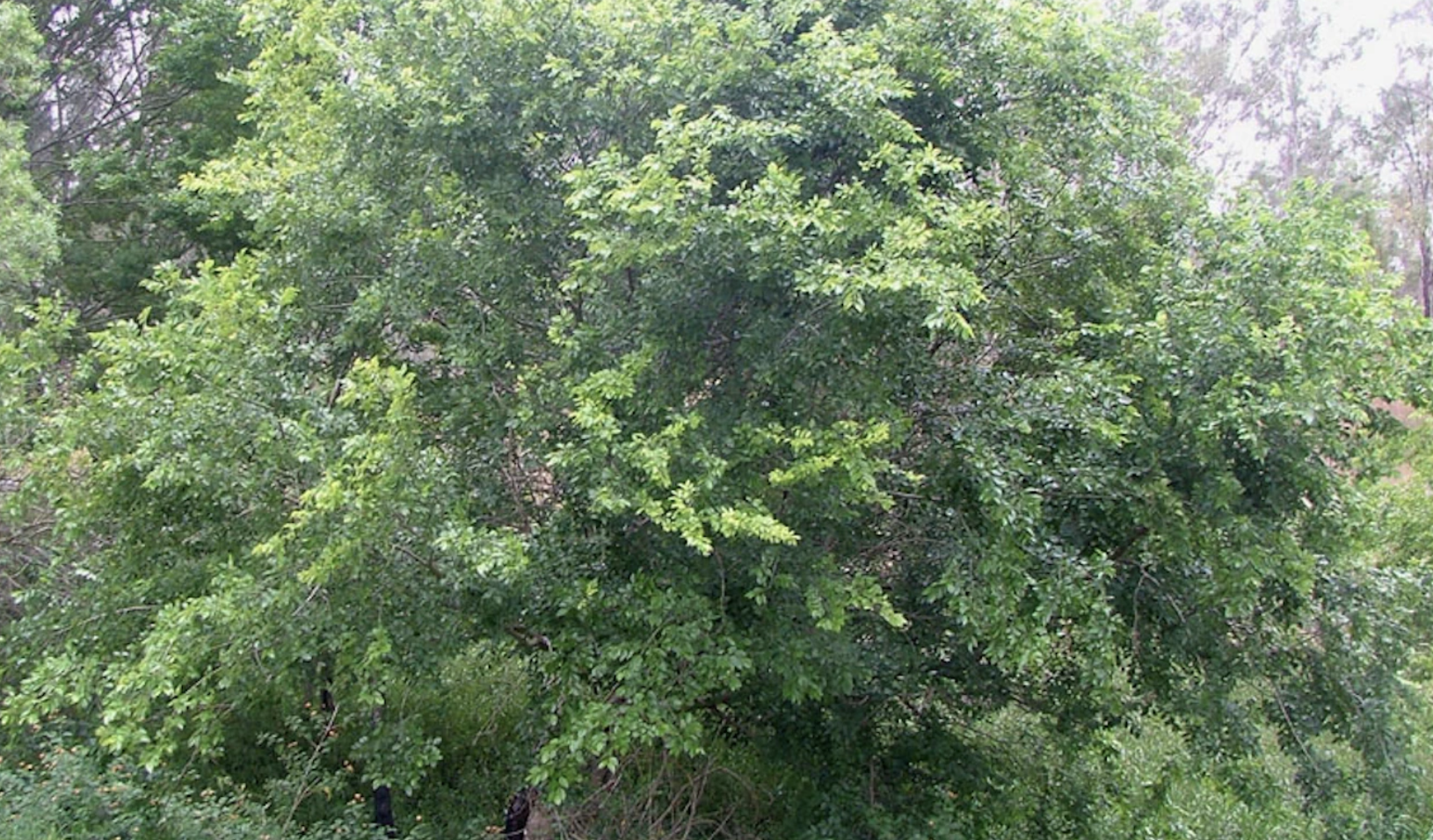
If you’ve ever tried to get rid of a Chinese Elm, you may have discovered something frustrating: cutting it down doesn’t always mean the problem is gone.
What looked like a small tree can quickly become a much bigger headache, particularly when it has established itself in a backyard, along a fence line, beside a driveway or near a creek or drainage area.
In South East Queensland, the tree commonly known as Chinese Elm or Chinese Celtis (Celtis sinensis) is a particularly persistent invasive species. It is listed as Category 3 restricted invasive matter under Queensland’s Biosecurity Act 2014, meaning it must not be given away, sold or released into the environment. Property owners also have a general biosecurity obligation to take reasonable and practical measures to minimise the risks associated with it.
So, if you’ve got one growing on your property, what should you actually do?
First: Make Sure It Really Is a Chinese Celtis
This is an important one.
“Chinese Elm” is a common name that can refer to more than one species, which can cause confusion for Queensland homeowners.
The invasive species we are talking about here is Chinese Celtis (Celtis sinensis). It is also known by common names including Chinese Elm, Chinese Hackberry and Chinese Nettle-tree.
Chinese Celtis can be identified by characteristics including:
Glossy green leaves with toothed margins
Alternately arranged leaves
Smooth greyish bark as the tree matures
Small round fruits that change from green to orange and eventually darker colours
A spreading growth habit
If you’re not completely sure what species you have, getting the tree correctly identified before removing it is a smart first step.
Why Does Chinese Celtis Spread So Easily?
One of the biggest problems with Chinese Celtis is its ability to establish itself in places where you probably never intended to grow a tree.
The species produces small fruits, with seeds commonly spread by birds, flying foxes and water. That means a mature tree somewhere nearby can effectively become a seed source for new trees across the surrounding area.
This is one reason you might suddenly notice small Chinese Celtis seedlings appearing along:
Fence lines
Garden beds
Driveways
Retaining walls
Gutters and roof areas
Creek and drainage areas
Other disturbed sections of your yard
And the smaller they are, the easier they are to deal with.
Queensland Government specifically recommends removing Chinese Celtis while plants are small, with small seedlings able to be hand-pulled or dug out.
And Yes… They’re Surprisingly Prickly
If you’ve ever tried to pull a Chinese Celtis seedling out of the garden, you may have discovered another one of its less charming qualities: they can be seriously prickly.
Those small branches and sharp little growths can make an otherwise simple gardening job surprisingly unpleasant. And once a Chinese Celtis has grown into a larger tree, getting up close and personal with it is definitely not something you want to do without the right equipment.
We know this one personally — we had one at home, and let’s just say it wasn't exactly a welcome addition to the garden.
It's another good reason to deal with Chinese Celtis while it's young rather than letting it establish and become a much bigger (and pricklier) problem.
“I Cut It Down. Why Is It Growing Again?”
This is where things can become particularly frustrating.
Chinese Celtis is a tough, fast-growing species, and simply cutting down a larger established tree isn't necessarily the same as properly managing the problem.
If you're dealing with an established tree, the objective shouldn't simply be to make the visible trunk disappear. The tree needs to be assessed and managed appropriately to prevent further growth and reduce the chance of the problem continuing.
For larger plants and established infestations, Queensland Government identifies herbicide treatment as an effective control method, while physical removal is another management option depending on the situation.
This is also why DIY chainsaw removal isn't always the best answer.
If the tree is large, growing close to your house, sitting beside a fence, overhanging a structure or located near powerlines, removing it safely can become considerably more complicated than it first appears.
What About the Roots?
Chinese Celtis can become particularly troublesome when it has been allowed to establish in a confined urban environment.
A large tree growing close to structures, paving, retaining walls or other infrastructure deserves an assessment from an experienced arborist before you start cutting.
The bigger the tree becomes, the more important it is to consider the entire tree and its location — not just the trunk you can see.
A professional arborist can assess the tree, determine the safest removal method and identify any other Chinese Celtis seedlings or regrowth that may need to be dealt with.
Don't Forget the Little Ones
One of the easiest mistakes homeowners can make is removing the big Chinese Celtis while leaving the seedlings scattered around the yard.
Because the species spreads readily through its seeds, keeping an eye out for new seedlings is an important part of long-term management. Queensland Government recommends early detection and removal as a key part of controlling Chinese Celtis.
If you've removed one recently, take a walk around your property every few months and look for young plants.
The five-minute job of pulling out a tiny seedling is considerably easier than dealing with another established tree several years down the track.
What Should You Plant Instead?
Removing an invasive tree doesn't have to mean leaving an empty space in your garden.
In fact, replacing an invasive species with an appropriate native tree can be a great opportunity to improve your yard while supporting local biodiversity.
The right replacement tree will depend on your property, available space, soil conditions, surrounding structures and what you want from the tree — whether that's shade, screening, habitat or simply something beautiful to look at.
If you're in Ipswich, it's also worth checking out the local council's vegetation and free plant programs when planning your replacement planting.
Chinese Elm vs Chinese Celtis: How Can You Tell the Difference?
The names can be confusing, particularly because Celtis sinensis is commonly called Chinese Elm, even though it is actually a species of Celtis.
One of the easiest ways to tell the difference is by looking closely at the leaves:
Chinese Celtis (Celtis sinensis)
Has broader leaves with blunt, scalloped teeth that are mostly concentrated towards the upper half of the leaf.
Usually has three prominent veins radiating from the base of the leaf — a useful identifying feature.
Leaves tend to have a slightly more robust appearance.
True Chinese Elm (Ulmus parvifolia)
Has smaller, narrower and finer leaves.
The leaf margins have sharper teeth around much of the leaf, rather than mainly towards the upper half.
Does not have the same prominent three-veined pattern radiating from the base.
Still not sure? Don't rely on the name alone. If you think you've got a Chinese Celtis on your property, getting it professionally identified is worthwhile before deciding what to do with it.
Got a Chinese Celtis Taking Over Your Yard?
At Brien's Tree Solutions, we regularly work with homeowners across Ipswich, Brisbane's western suburbs and surrounding South East Queensland areas to assess, prune and remove problem trees.
If you've got a Chinese Celtis that's getting too large, growing somewhere it shouldn't or continually popping up around your property, don't wait until it becomes a much bigger problem.
Read our original guide to Chinese Elm Trees →
And if you're wondering whether you've got one of the other common problem trees found around Ipswich, we've put together a guide to the Top 5 Problem Trees in Ipswich Yards →.
Need a leafy problem out of your life? Brien's Tree Solutions can help.